Key facts
- A simultaneous exhibition is one strong player against many opponents on separate boards, moving from board to board in a circuit; the master usually has White everywhere and you move when he reaches you.
- The record for one player is 604 boards, set by GM Ehsan Ghaem Maghami over 25 hours in Tehran on 8-9 February 2011, with 580 wins, 16 draws and 8 losses, or 97.35% (FIDE).
- Guinness requires opponents rated at least 1200, which is why it counts only 135 of Maghami's 604 boards; the clock-simul mark is GM Daniel Dardha's 50 boards in Deinze on 9 June 2025, 43.5/50 (Chess.com).
- The blindfold record is 48 boards by GM Timur Gareyev at the University of Nevada, Las Vegas, on 3-4 December 2016, in 19 hours and 9 minutes (FIDE).
- In Dubai the UAE Individual Chess Championship drew 204 players to the Dubai Chess and Culture Club in July 2026, and the next FERZ simultaneous match is with GM Anish Giri on 12 December 2026 (Khaleej Times, ferz.co).
Simultaneous chess is one player against many opponents at the same time, each on their own board, with the single player walking the circuit and answering every position in turn. The largest ever was 604 boards: GM Ehsan Ghaem Maghami played them over 25 hours in Tehran on 8 and 9 February 2011 and finished on 97.35% (FIDE). Most simuls are smaller than that, and the useful question for a reader in Dubai is what the format actually asks of you and where you can sit down for one. This guide covers both.
How a simultaneous chess exhibition works
The boards are set in a ring or a long row, players on the outside, the master on the inside. He takes White on every board, plays his first move down the line, then keeps walking. You are expected to move when he arrives at your board, which is the rule that shapes everything else about the format.
The circuit time is the whole game. In Tehran, one lap of 604 boards took about 15 minutes early on and stretched to roughly 30 minutes a move in the middlegame (FIDE). At a club simul of 20 boards you get something closer to a minute. That is your thinking time, and it is a gift: the master has seconds at your board, you have a lap.
Etiquette is simple. You stay at your board, you do not consult an engine or a neighbour, and most hosts allow one pass, where you may ask the master to come round again before you commit. Resigning or offering a draw is done when he is standing in front of you, not shouted down the line.
Clock simuls and blindfold simuls
The ordinary simul has no clocks. Two harder versions do exist, and they are where the records get interesting.
In a clock simul every board runs on its own clock, so the master can no longer gain time by walking fast. GM Daniel Dardha played 50 of them at once in the concert hall in Deinze, Belgium, on 9 June 2025, with two hours a side on every board against opponents averaging about 1850. He won 40, drew 7 and lost 3, for 43.5 out of 50, and beat the previous mark of 47 games and 35 points set by GM Sipke Ernst in 2022 (Chess.com).
Blindfold means the master never sees a board. He is told each opponent's move and keeps every position in his head. GM Timur Gareyev played 48 opponents blindfold at the University of Nevada, Las Vegas, on 3 and 4 December 2016, finishing after 19 hours and 9 minutes with 35 wins, 7 draws and 6 losses, a score of 80.2%. He rode an exercise bicycle throughout, and the mark he broke was 46 boards by the German master Marc Lang in Sontheim an der Brenze on 27 November 2011 (FIDE).
The simultaneous chess records that actually stand
Board counts in this format come with conditions attached, and the conditions are the reason two sources will give you two different numbers.
Maghami's 604 is the headline. About 1,500 people registered in Tehran and 604 played, aged 5 to 85, every one of them writing down the moves. Play began at 10:20 in the morning on 8 February, the record was secured at 6 the next morning once he had beaten 484 opponents, and the last game finished at 11:25. The final tally was 580 wins, 16 draws and 8 losses, and the attempt needed a minimum score of 80% to count. The marks he passed were 500 opponents by GM Morteza Mahjoob in 2009 at 88.4% and a reported 523 by GM Alik Gershon at 86% (FIDE, ChessBase).
Guinness counts it differently. Its rules require every opponent to be rated at least 1200, and by that test 469 of the 604 did not qualify, which leaves the ratified figure at 135 (Chess.com). Neither number is wrong. One measures what happened in the hall, the other measures what a record body is willing to certify, and a guide that quotes only one of them is hiding half the story.
A short history of simultaneous play
The format is older than the records. Philidor gave blindfold displays against two or three opponents in the 1700s. Morphy played eight games blindfold at the Café de la Régence in Paris in 1858, the display drawn for Harper's Weekly that November. Harry Nelson Pillsbury reached 20 games at once in Philadelphia in 1900, having earlier played 15 chess and 15 checkers games together (ChessBase).
Alekhine is the name that matters most here. In 1924 he played 26 blindfold games against strong opposition, Kashdan and Steiner among them, and scored 16 wins, 5 losses and 5 draws, which ChessBase calls probably the strongest blindfold exhibition ever held. He set a new mark of 32 blindfold games in 1934. Reti took the record to 29 in Sao Paulo in between, Koltanowski played 34 blindfold in Edinburgh in 1937 over 13 hours for 24 wins and 10 losses, and Najdorf reached 45 in Sao Paulo in 1947, scoring 39 wins, 4 draws and 2 losses (ChessBase).
How to play your best game in a simul
You are not going to outcalculate a grandmaster. You can, however, use the two advantages the format hands you, which are time and his workload.
Use the lap. The worst habit in a simul is moving instantly because the master is standing there. He is going to walk away either way. Think while he is at the other end of the row, decide on your move before he returns, and spend his visit confirming it rather than starting from scratch.
Play a position you know. A solid opening you have played a hundred times is worth more than a sharp line you half remember, because he will punish the half-remembered one in the seconds he spends at your board. Quiet, closed positions also work in your favour: they need judgement rather than calculation, and judgement is what he has least time for.
Do not chase complications early. Tactics are the one thing a strong player sees instantly even at a glance. Slow positions where small advantages accumulate are harder to assess in five seconds than a forcing sequence.
Keep your pieces defended. A great many simul games end to a single undefended piece picked off in passing. If every piece is protected, he has to find a real plan, and finding real plans on 20 boards is what takes him time.
Write your moves down. It is the only way you will have the game afterwards, and a game against a grandmaster is worth keeping.
Where to play simultaneous chess in Dubai
Two routes, and they suit different people.
The club and federation route is the competitive one. The Dubai Chess and Culture Club is the emirate's main chess venue and hosts the national calendar: the UAE Individual Chess Championship was played there over nine rounds in July 2026 with 204 entries across the senior and junior sections, won by Omran Al Hosani on 7.5 points and by Woman Grandmaster Rouda Alserkal on 8 (Khaleej Times). Simuls there tend to be attached to tournaments and junior programmes rather than scheduled on their own, so the way in is the club's own calendar. The wider picture of where the city plays is in our guide to chess clubs in Dubai.
The second route is a night out that happens to include a grandmaster. A FERZ Premier Chess Night is built around one: the simultaneous match is on the programme at 6 PM, and the rest of the evening is drinks, performances and open play. The next is the Premier Chess Night with Anish Giri on 12 December 2026 at the Sajan Residence in Emirates Hills, from 5 PM to 1 AM. A Platinum ticket at 1,200 AED includes a board in the Giri simultaneous match; VIP at 4,000 AED adds a private game against him and a board he has signed; Regular at 500 AED covers the evening and the free-play zones without a seat in the simul. Giri won the FIDE Grand Swiss in 2025 and Tata Steel in 2023, and his career and current rating are in our Anish Giri profile.
FERZ is a social and chess club rather than a tournament club, and every level sits at the same tables, which is the point of the format: a simul is the one setting where a beginner and a club player get the same opponent on the same night. Membership covers 15 or more events a year. If you want the whole calendar of chess in the city first, start with chess in Dubai.
A checklist for your first simultaneous chess game
- Check which ticket or entry actually includes a board, because the simul is usually a separate tier.
- Arrive early and take a board near the middle of the row, where the master passes most often.
- Choose one opening you know well and play it whatever he does.
- Think during the lap, not during his visit, and have your move ready before he arrives.
- Keep every piece defended and avoid early tactics.
- Use your one pass if the host allows it, and save it for a position you genuinely cannot read.
- Record the moves, so you leave with the game.
- Offer a draw or resign in front of him, and shake hands when it ends.
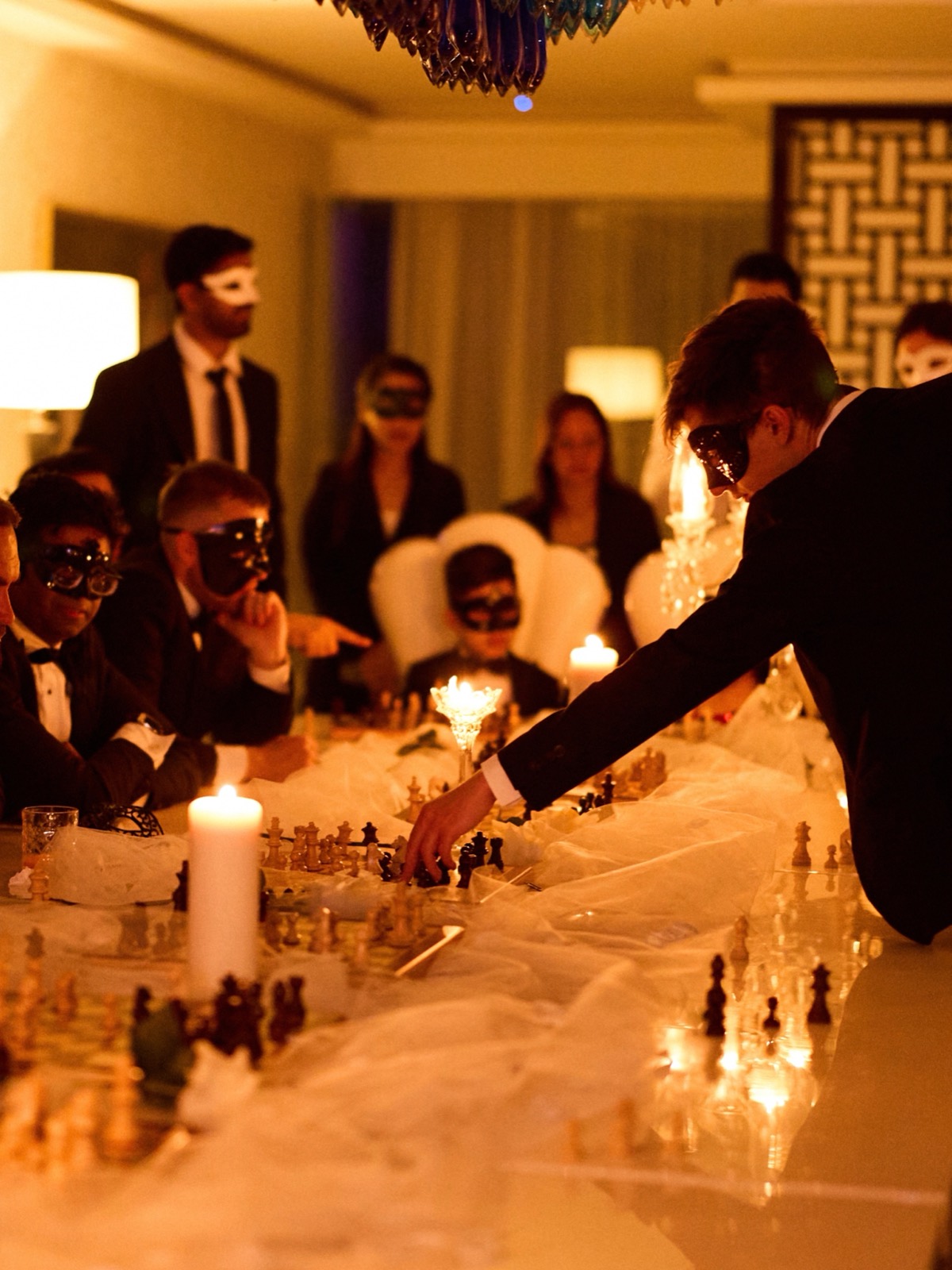
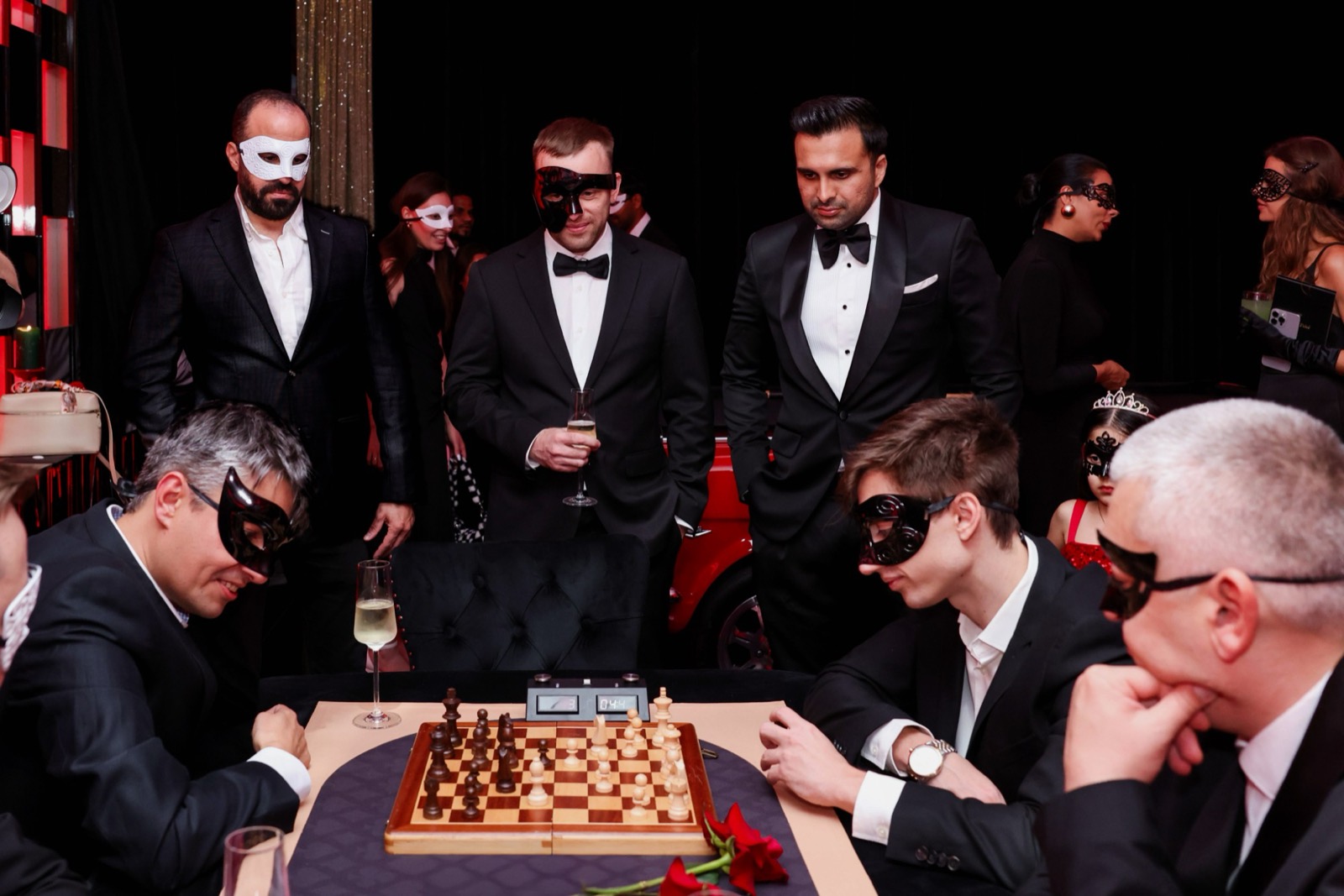
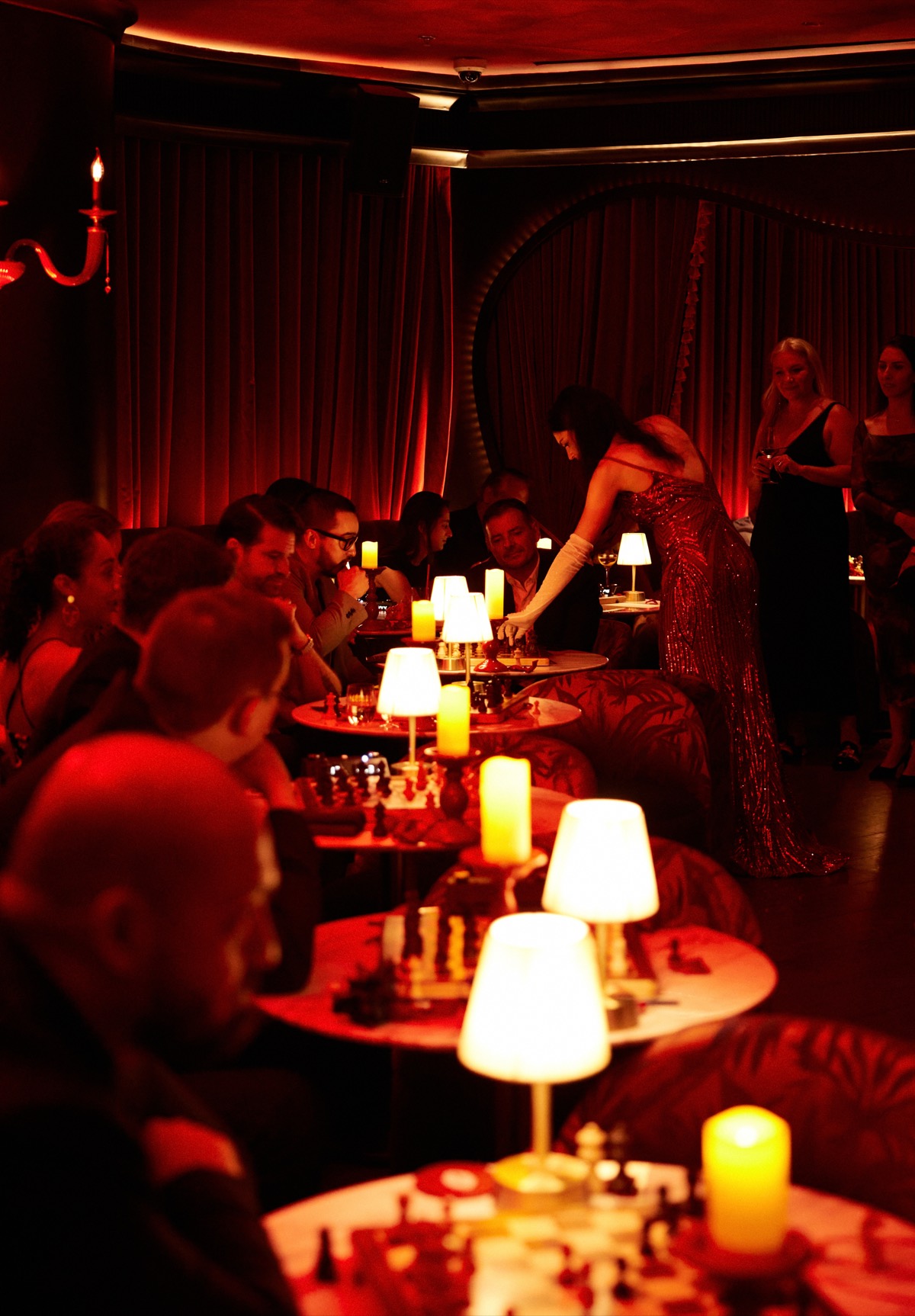
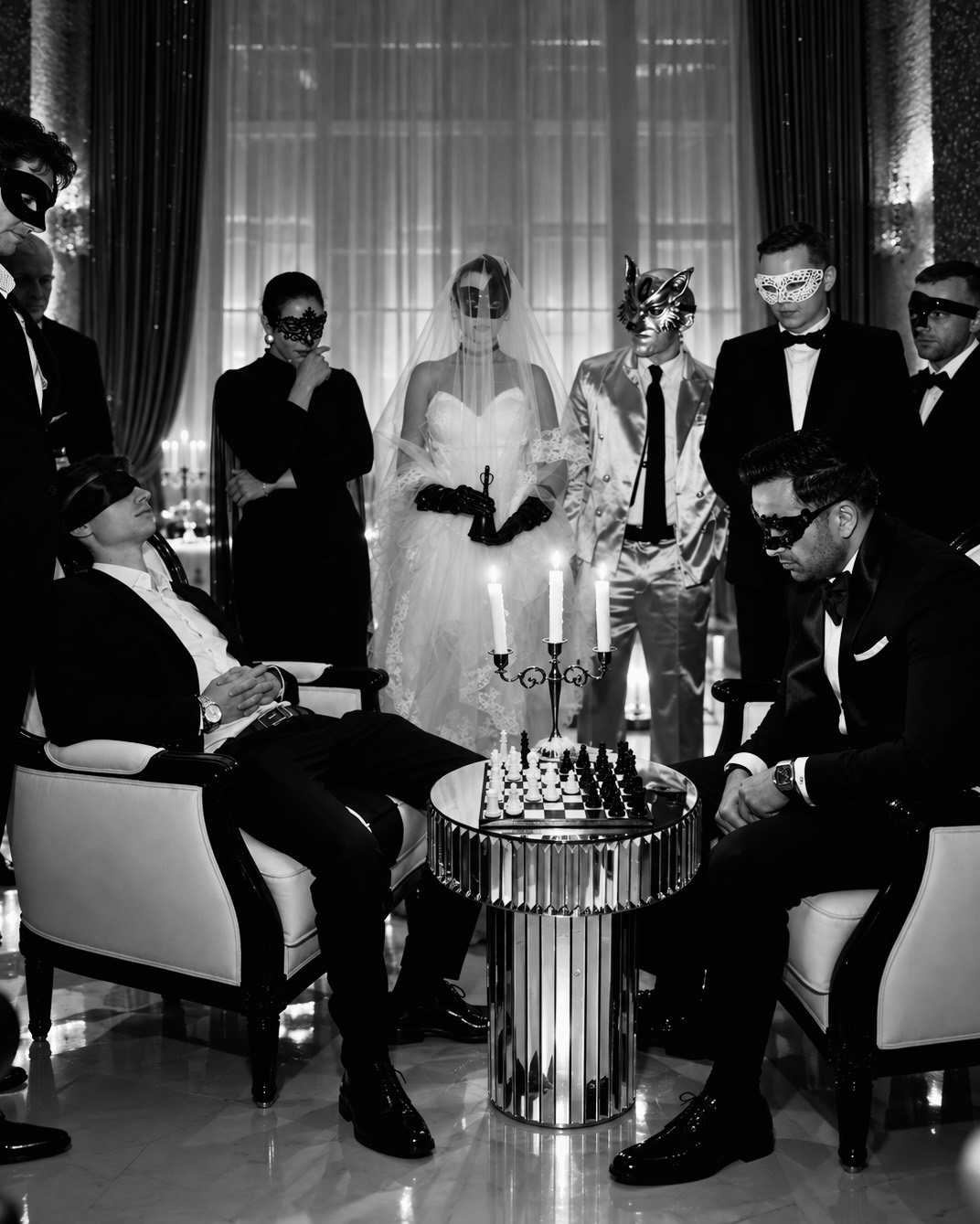
Cover and photographs: FERZ chess nights in Dubai.
Sources
- World Record 604 Board Simultaneous Chess Exhibition by GM Ehsan Ghaem Maghami, FIDE
- New world record for 604-board simul by Iranian GM Maghami, ChessBase
- GM Timur Gareyev Breaks Guinness World Record, FIDE
- Daniel Dardha Breaks World Record With 50-Board Clock Simul, Chess.com
- Blindfold World Record event in Las Vegas, ChessBase
- Abu Dhabi Chess Club stars Omran Al Hosani and Rouda Alserkal win UAE national titles, Khaleej Times
- Premier Chess Night with Anish Giri, 12 December 2026, FERZ