Key facts
- Gukesh D and Javokhir Sindarov play the 2026 World Chess Championship in Geneva for USD 2.5 million, about AED 9.18 million, net of local taxes (FIDE regulations, Article 4.5).
- Each player receives USD 200,000 for every game he wins, forfeits included, and the rest is split equally; tiebreaks, a 7½–6½ with 13 decisive games or an 8–6 with 14 pay a fixed USD 1.3 million to 1.2 million (FIDE).
- By that rule each player takes USD 1.25 million plus 100,000 for every game he wins more than his opponent: the champion gets between USD 1.3 million and 2.05 million, the runner-up between 450,000 and 1.2 million (FERZ arithmetic from the FIDE regulations).
- Under the same rule in 2024, Gukesh beat Ding Liren 7½–6½ with three wins to two and took USD 1.35 million (Chess.com).
- The richest official title match is still Kasparov–Karpov in 1990, played for USD 3 million; Fischer–Spassky in 1972 was played for USD 250,000 (Chess.com).
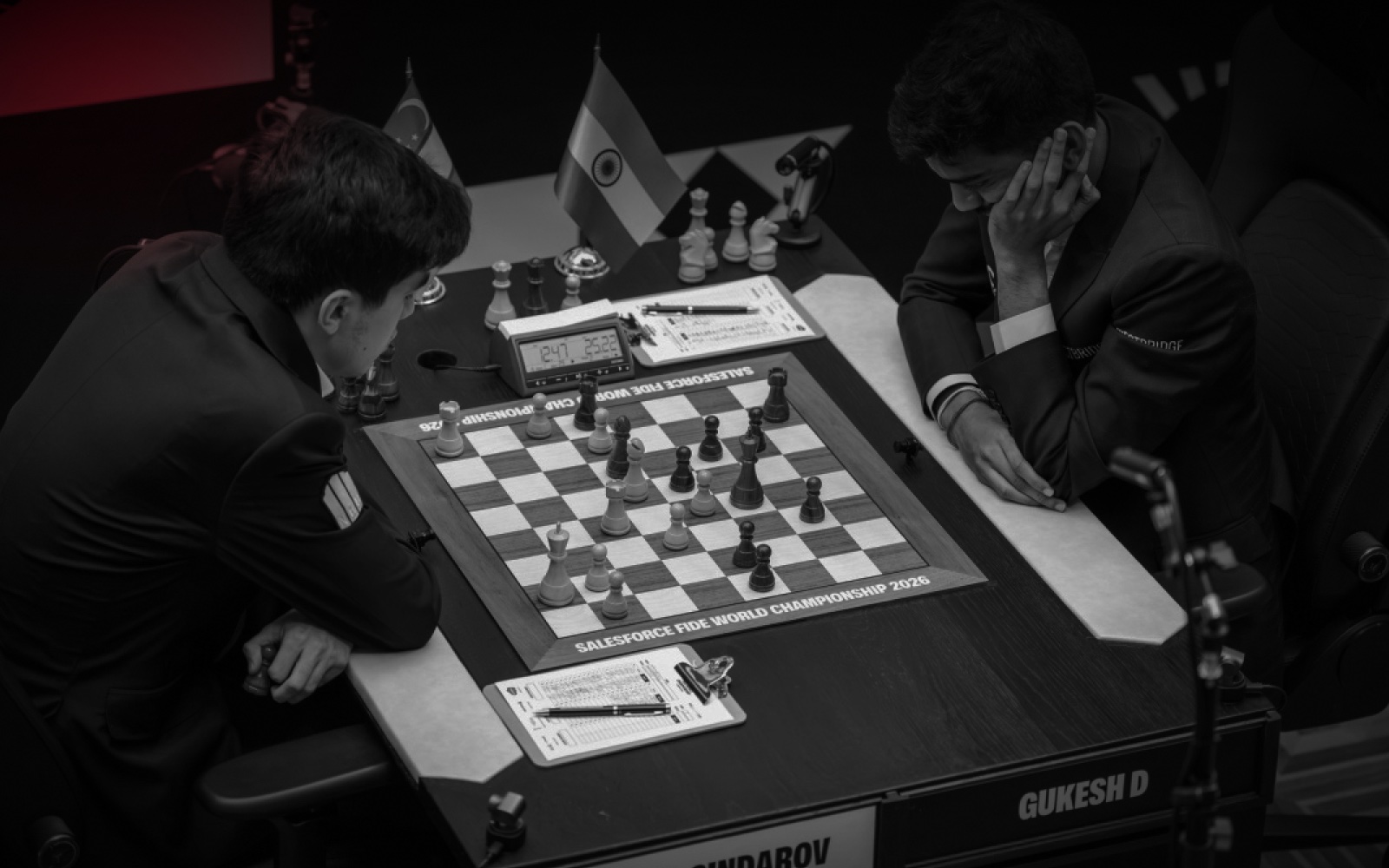
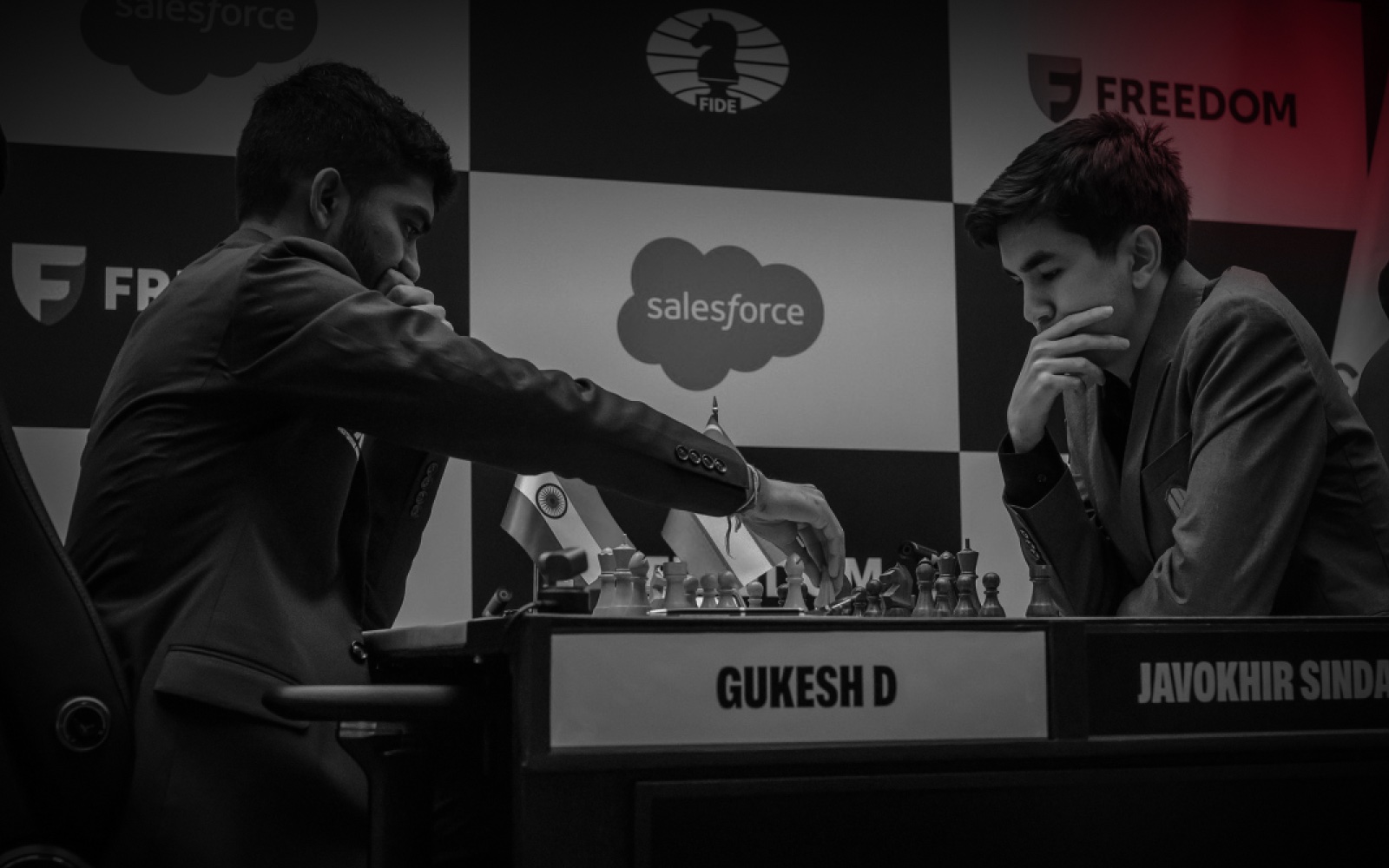
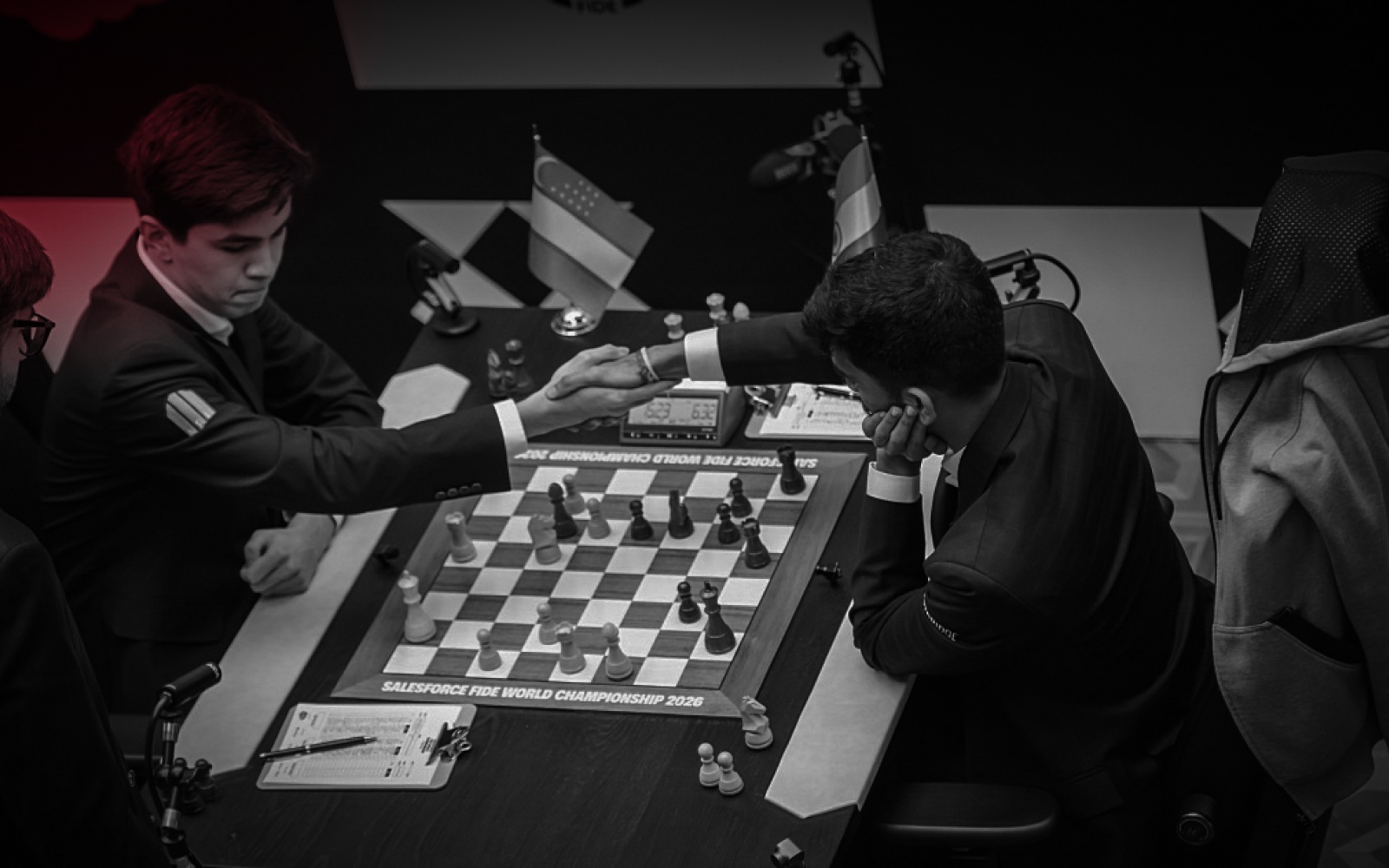
The World Chess Championship prize money for 2026 is USD 2.5 million, about AED 9.18 million, and FIDE pays it out by the game: USD 200,000 to a player for every game he wins, with the rest split equally between the champion, Gukesh D, and the challenger, Javokhir Sindarov (FIDE regulations). The classical games run in Geneva from 24 November to 11 December, with tiebreaks, if needed, on 12 December. Below: the rule in full, worked examples of what each player takes home for different results, the title match purses since 1972, and how this one compares with the other big prizes in chess. The live score and schedule are on our World Chess Championship 2026 page.
How the World Chess Championship prize money is split in 2026
Article 4.5 of the match regulations sets out three cases. The general rule is the one above: USD 200,000 per game won, wins by forfeit included, and the remaining balance shared equally. Two close finishes are carved out, a 7½–6½ result with 13 decisive games and an 8–6 result with all 14 decisive. In those two, and in any match decided by tiebreaks, the split is fixed: USD 1.3 million to the winner and USD 1.2 million to the runner-up (FIDE).
The carve-outs cover the only two classical results where the per-game bonus would cost more than the fund holds. Thirteen wins at USD 200,000 come to USD 2.6 million, fourteen to USD 2.8 million. Tiebreak games earn no bonus at all: once the classical score reaches 7–7, the 1.3 to 1.2 split stands whatever happens in the rapid and blitz games that follow.
The money arrives in two parts. Each player is due USD 200,000 one month before the first game, taken out of the fund, and the balance within thirty working days of the end of the match. The fund is stated net of any applicable local taxes (FIDE regulations).
The rule in one line: USD 1.25 million plus 100,000 a net win
Do the sum and the per-game rule becomes simpler than it looks. A player gets USD 200,000 for each of his wins plus half of whatever is left once both players' wins are paid. That always comes to USD 1.25 million, half the fund, plus USD 100,000 for every game he wins more than his opponent, or minus 100,000 for every game he wins fewer.
So every decisive game moves USD 100,000, about AED 367,000, from the loser's share to the winner's. Draws give both players the same half point, which makes the difference in wins equal to the final margin. A one-point win pays USD 1.35 million, a two-point win 1.45 million, and so on up the scale. The number of draws changes nothing: a 7½–6½ won with three wins to two pays exactly what a 7½–6½ with one win and thirteen draws pays.
Worked examples of the prize money for Gukesh and Sindarov
These are examples, not forecasts. Every figure is arithmetic from Article 4.5 of the FIDE regulations, in US dollars and in dirhams at the UAE peg of 3.6725 to the dollar (The National). "Champion" means whichever of the two wins.
| Example result | Wins, champion to runner-up | Champion | Runner-up |
|---|---|---|---|
| 8–0 after 8 games | 8 to 0 | USD 2.05 million (AED 7,528,625) | USD 450,000 (AED 1,652,625) |
| 7½–4½ after 12 games | 4 to 1 | USD 1.55 million (AED 5,692,375) | USD 950,000 (AED 3,488,875) |
| 8–6 after 14 games, two draws | 7 to 5 | USD 1.45 million (AED 5,325,125) | USD 1.05 million (AED 3,856,125) |
| 7½–6½ after 14 games | 3 to 2 | USD 1.35 million (AED 4,957,875) | USD 1.15 million (AED 4,223,375) |
| 7½–6½ with 13 decisive games | 7 to 6 | USD 1.3 million (AED 4,774,250) | USD 1.2 million (AED 4,407,000) |
| 8–6 with all 14 games decisive | 8 to 6 | USD 1.3 million (AED 4,774,250) | USD 1.2 million (AED 4,407,000) |
| 7–7, decided in tiebreaks | any | USD 1.3 million (AED 4,774,250) | USD 1.2 million (AED 4,407,000) |
The table has a ceiling and a floor. The first player to 7½ points wins the match (FIDE regulations), so nobody can win more than eight games, and eight straight wins is the widest margin there is. That pays the champion USD 2.05 million, 82 percent of the fund, and leaves the runner-up USD 450,000, the lowest share the rule allows on the board. Every other result sits inside it: the champion takes at least USD 1.3 million, the runner-up at most USD 1.2 million.
The carve-outs produce one oddity. An 8–6 with two draws pays the champion USD 1.45 million; an 8–6 with fourteen decisive games pays him 1.3 million, because the fixed split replaces the bonus.
Singapore 2024 ran on identical wording (FIDE 2024 regulations). Gukesh won games 3, 11 and 14, Ding Liren games 1 and 12, and the other nine were drawn: 7½–6½, the fourth row of the table (Chess.com). Gukesh took USD 1.35 million (Chess.com), which left Ding the other 1.15 million. The classical record between this year's two players is in Gukesh vs Sindarov head to head.
World Chess Championship prize money since 1972
Title match purses have grown less than you might expect. When Bobby Fischer played Boris Spassky in 1972, the fund reached USD 250,000 after Jim Slater doubled it, which Chess.com put at about USD 1.8 million in 2022 money. The record still belongs to the last Kasparov–Karpov match: in 1990 they played for USD 3 million, by Chess.com's count the richest official world championship match ever (Chess.com). No match since has passed it. Garry Kasparov and Nigel Short played for GBP 1.7 million in 1993.
The matches of the last thirteen years, in the currency each was played for:
| Year | Match, winner first | Prize fund | How it was split |
|---|---|---|---|
| 2013 | Carlsen–Anand | USD 2.55 million | Carlsen took USD 1.53 million |
| 2016 | Carlsen–Karjakin | EUR 1 million | 6–6, then 3–1 in rapid: EUR 550,000 to 450,000 |
| 2018 | Carlsen–Caruana | EUR 1 million minimum | 12 draws, then 3–0 in rapid: 55 to 45 percent |
| 2021 | Carlsen–Nepomniachtchi | EUR 2 million | 7½–3½ after 11 games: 60 to 40 percent |
| 2023 | Ding–Nepomniachtchi | EUR 2 million | Tiebreaks: EUR 1.1 million to 900,000 |
| 2024 | Gukesh–Ding | USD 2.5 million | 7½–6½, three wins to two: USD 1.35 million to 1.15 million |
| 2026 | Gukesh–Sindarov | USD 2.5 million | USD 200,000 a win, the rest split equally |
Figures: 2013 from Chess.com; 2016 from Chess.com; 2018 from FIDE and Chess.com; 2021 from Chess.com; 2023 from FIDE and Chess.com; 2024 from the sources above.
The 2021 match was played in Dubai, alongside the World Expo, and Magnus Carlsen's 60 percent came to EUR 1.2 million (Chess.com). Every player who has held the title is in our guide to the world chess champions.

From 60–40 to USD 200,000 a win
Before 2024, the result alone decided the split. The 2020 regulations, the ones used for Carlsen–Nepomniachtchi in Dubai, gave the winner 60 percent if the match ended within the classical games and 55 percent after tiebreaks, plus a 200,000 euro advance to each player (FIDE 2020 regulations). Under that rule a leader lost no money by drawing out the rest of the match.
FIDE switched to paying for wins in Singapore. Chess.com reported the change together with a shorter classical time control and 15-minute rapid tiebreaks in place of 25, all meant to produce more decisive games (Chess.com). The 2026 prize wording is word for word the 2024 one, except that the balance is now due within thirty working days of the match instead of fourteen (FIDE 2024 regulations).
The new rule also pays a narrow win less. Under 60–40, a champion who won in the classical games took 60 percent of the fund. In Geneva a 7½–6½ win pays 54 percent and a tiebreak win 52 percent. Only a margin of three points or more beats the old share.
How the title match compares with other chess prizes
Nothing else in chess pays like it. The other big events of the last two years pay first prizes below even the runner-up's floor in Geneva:
- FIDE World Cup, Goa, November 2025: USD 2 million across the field; Sindarov won it and took USD 120,000 (Chess.com).
- Esports World Cup chess: launched in Riyadh in 2025 with a USD 1.5 million prize pool (Chess.com). Carlsen won USD 250,000 there (FIDE) and the same again in Paris in August 2026 (Chess.com).
- FIDE Freestyle Chess World Championship, Weissenhaus, February 2026: USD 300,000 in all, USD 100,000 for first (FIDE regulations).
- Total Chess World Championship pilot, Budapest, November 2026: USD 650,000 over 24 places, USD 80,000 for first (Total Chess; our Total Chess report).
The USD 450,000 floor in Geneva is almost twice Carlsen's Esports World Cup prize and nearly four times what Sindarov earned for winning the World Cup. One decisive game in Geneva moves USD 100,000 from one share to the other, the whole first prize of the Freestyle championship.

Watching the title match from Dubai
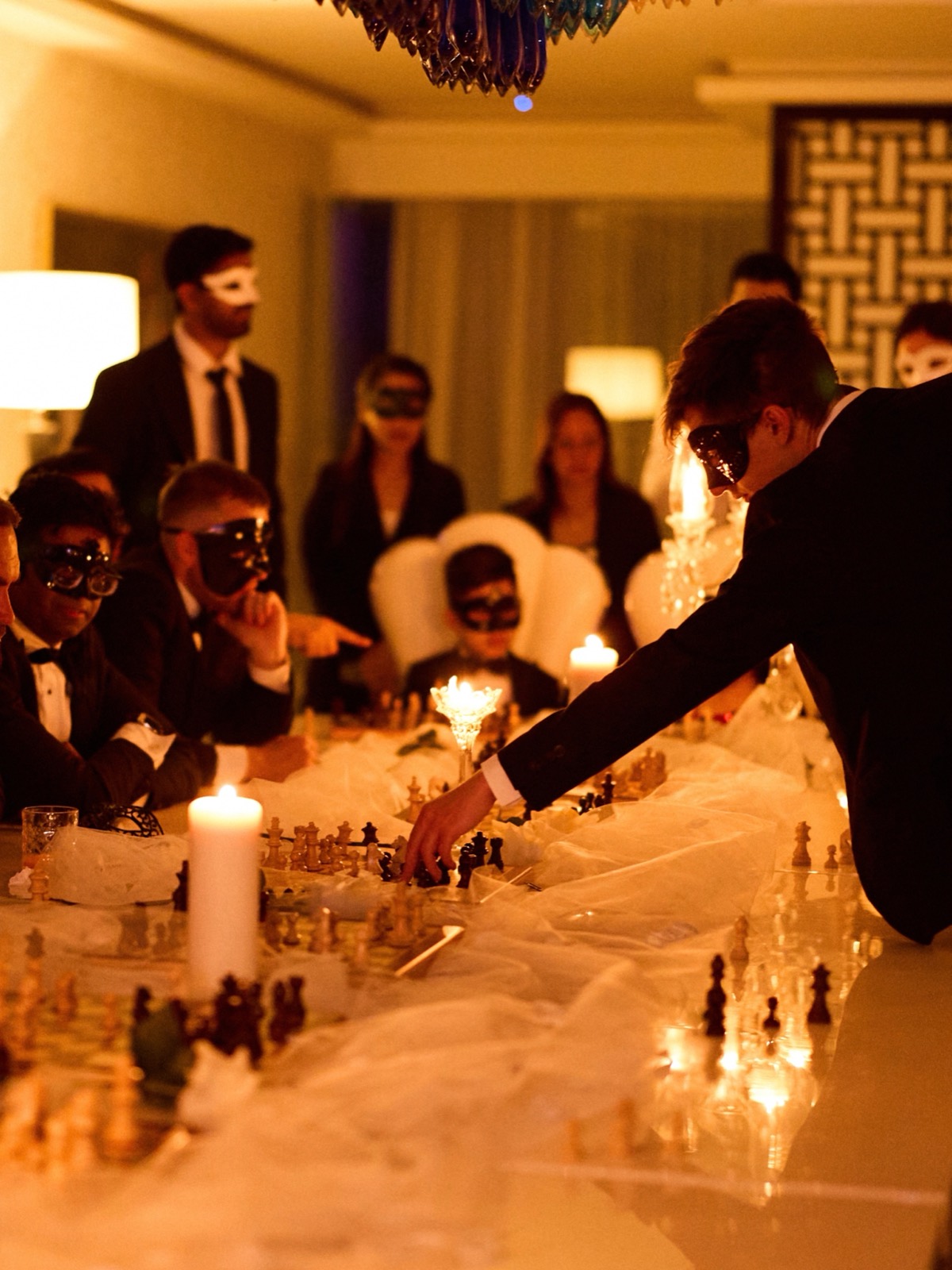
The prize fund has a Dubai chapter: the 2021 match was played here, and its challenger, Ian Nepomniachtchi, has since headlined a FERZ night. The 2026 regulations name Anish Giri, runner-up at the Candidates, as the first replacement if either player withdraws (Article 2.2). On 12 December, the day any tiebreak is played, Giri headlines our Premier Chess Night at the Sajan Residence in Emirates Hills, from 5 PM to 1 AM. FERZ is a social and chess club in Dubai, a membership club for lovers of chess and the arts, and every level is welcome.
A checklist for working out a player's prize money
- Count each player's wins in the classical games, wins by forfeit included.
- Subtract the smaller number of wins from the larger to get the margin.
- Add USD 100,000 per point of margin to USD 1.25 million for the champion, and take the same amount off for the runner-up.
- Check the decisive games: a 7½–6½ with 13 of them or an 8–6 with 14 pays a fixed USD 1.3 million to 1.2 million.
- Apply the same fixed split if the score reaches 7–7 and the title goes to tiebreaks.
- Multiply by 3.6725 for dirhams.
- Remember that USD 200,000 of each share is paid a month before game 1 and the rest within thirty working days of the match.
Cover: Ding Liren and Ian Nepomniachtchi at the 2023 World Chess Championship tiebreak in Astana. Photo: Eteri Kublashvili, ruchess.ru, CC BY-SA 3.0, edited by FERZ.
Sources
- Regulations for the FIDE World Championship Match 2026, FIDE
- Salesforce FIDE World Championship Match 2026: Schedule, format, and prize fund confirmed, FIDE
- Regulations for the FIDE World Championship Match 2024, FIDE Handbook
- Regulations for the FIDE World Championship Match 2020, FIDE Handbook
- General information, FIDE World Championship 2023, FIDE
- Magnus Carlsen and Fabiano Caruana Sign Championship Match Contracts, FIDE
- Regulations for the FIDE Freestyle Chess World Championship 2026, FIDE Handbook
- Magnus Carlsen wins first ever edition of Chess Esports World Cup, FIDE
- 18-Year-Old Gukesh Becomes Youngest-Ever Undisputed Chess World Champion, Chess.com
- The Top Chess Prizewinners In 2024, And How Much They Won, Chess.com
- New Ding-Gukesh World Championship Rules Encourage Faster, More Decisive Games, Chess.com
- Who Is The Biggest Prizewinner In Chess History?, Chess.com
- Carlsen Wins Rapid Playoff, Defends World Championship, Chess.com
- World Chess Championship 2018: Carlsen vs Caruana, Chess.com
- FIDE World Chess Championship 2021: Carlsen Defeats Nepomniachtchi 7.5-3.5, Chess.com
- Javokhir Sindarov Becomes Youngest Ever World Cup Winner, Chess.com
- Chess Makes Historic Debut At Esports World Cup 2025 With $1.5 Million Prize Pool, Chess.com
- Carlsen Wins 2026 Esports World Cup: 7 Conclusions, Chess.com
- Regulations, Total Chess World Championship Tour Pilot 2026, Total Chess
- Timeframe: When the UAE pegged its dirham to the US dollar in 1997, The National