Key facts
- Two first moves cover four fifths of serious chess: in the Lichess masters database of 2,997,412 games, 1.e4 appears 1,368,125 times (45.6 percent) and 1.d4 1,070,515 times (35.7 percent), checked 26 November 2026.
- The Sicilian Defence is the most played answer to 1.e4 at master level, 627,286 games out of 1,368,125, or 45.9 percent, ahead of 1...e5 on 24.3 percent (Lichess masters database).
- After 1.e4 e5 2.Nf3 Nc6 the Ruy Lopez (3.Bb5) is played in 65.3 percent of master games and the Italian Game (3.Bc4) in 19.2 percent, but the Italian is the more decisive of the two: 47.5 percent draws against 54.6 percent (Lichess masters database).
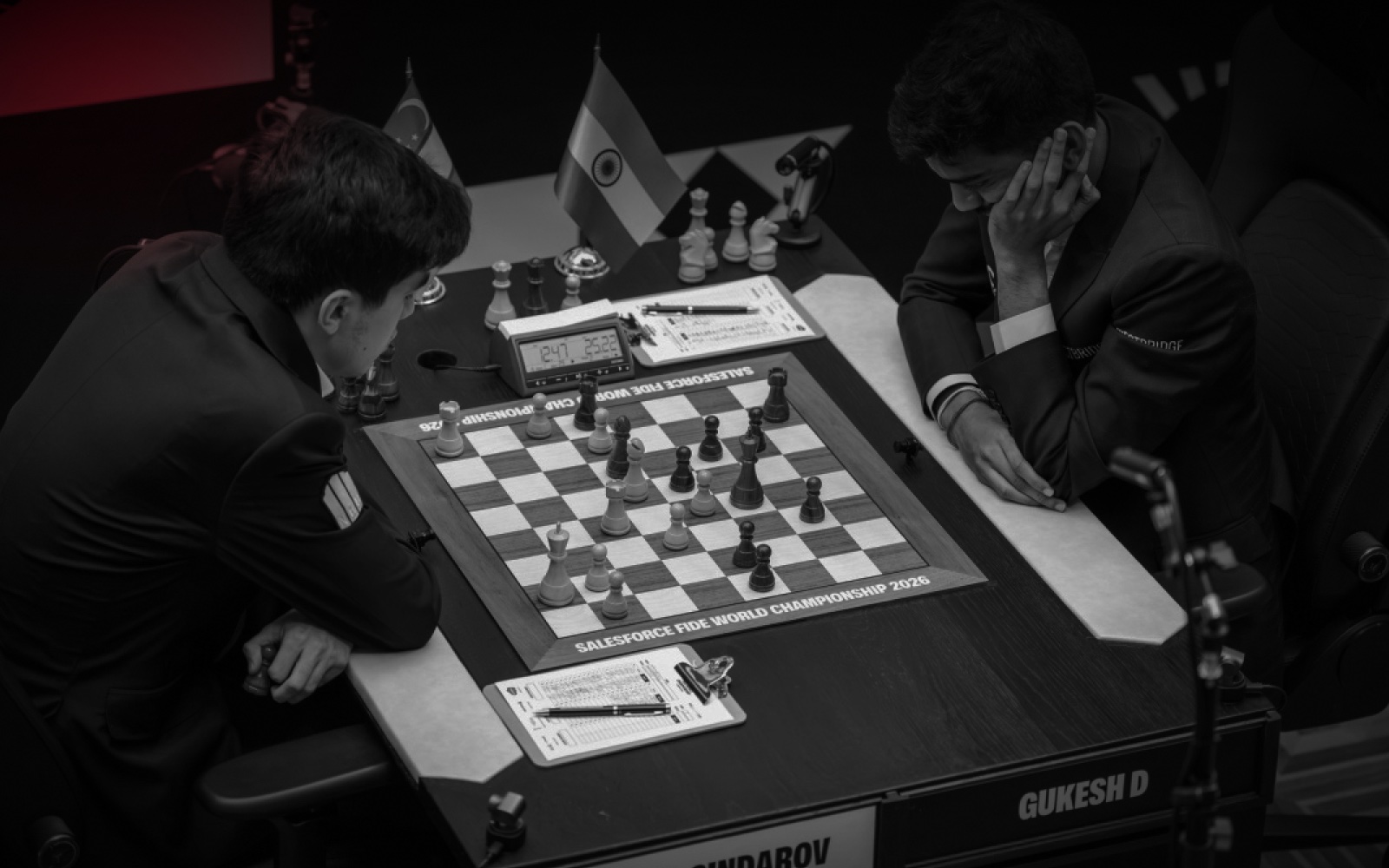
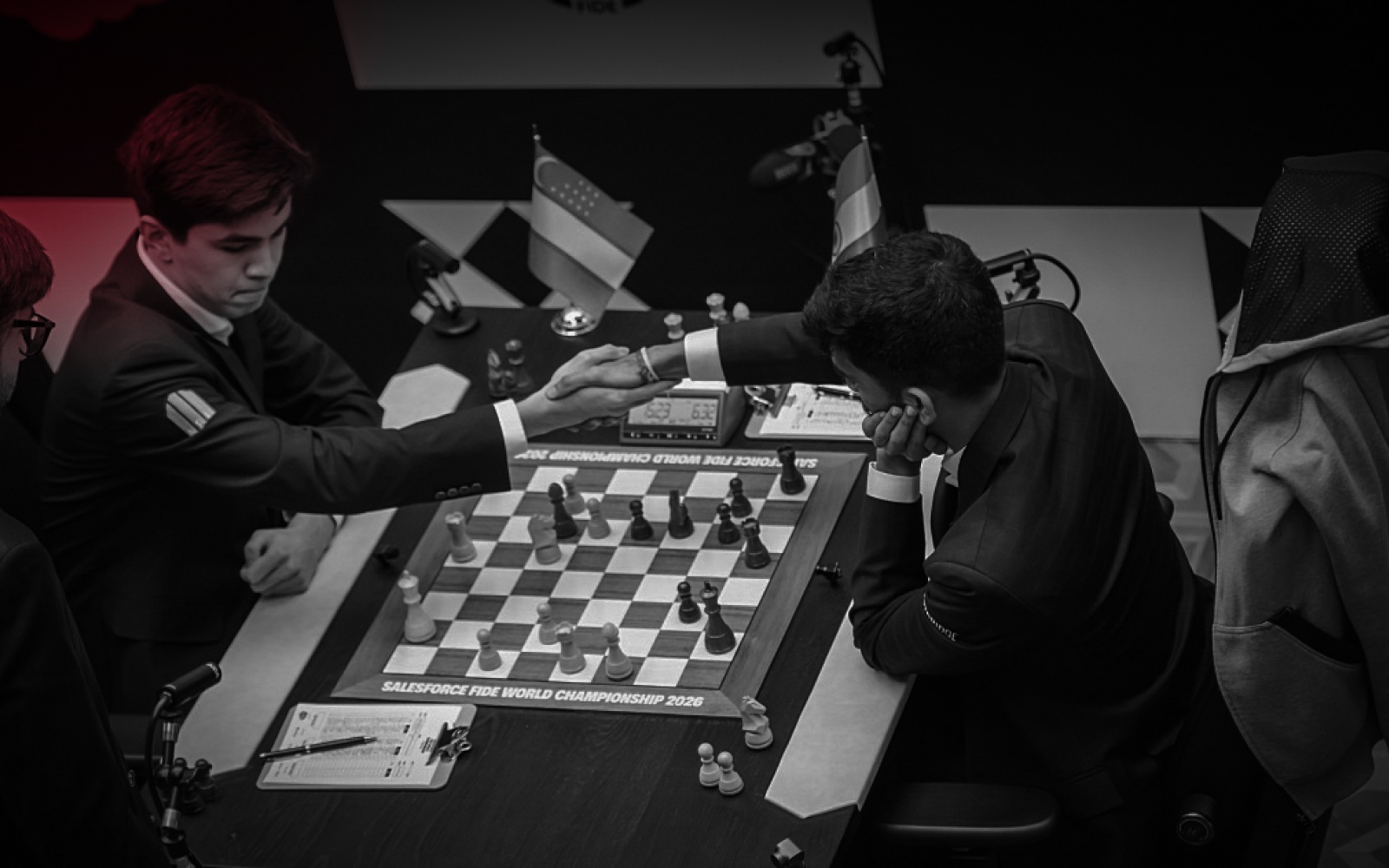
- Both openings in this guide's short list reached the 2026 world title match in its first two days: Gukesh met 1.e4 with the Berlin Defence in game 1 and opened with the London System in game 2, and both games were drawn (FIDE, 24 and 25 November 2026).
- The Queen's Gambit is still the main line of 1.d4 d5, played in 215,703 of 280,086 master games, or 77 percent (Lichess masters database).
Chess openings for beginners come down to about ten lines, and two first moves cover most of what you will ever face. In the Lichess masters database, which held 2,997,412 games when we checked it on 26 November 2026, 1.e4 and 1.d4 account for 81.3 percent of all first moves. Learn a handful of ideas behind those two moves and you will recognise the opening in nearly every game you play, at a club night or on your phone.
This guide gives you five openings to play with White, five defences to play with Black, what each one is trying to do, how often strong players choose it, and how deep you actually need to go. No move-by-move memorisation, because at this stage it does not survive the first surprise.
What an opening is, and what it is not
The opening is the first stretch of a game, roughly the first ten to fifteen moves, in which both sides bring pieces off the back rank and decide what kind of position they want. The named ones are simply sequences that have been played so often they earned a name, usually after a player or a city.
Nothing in the FIDE Laws of Chess, the rulebook in force since 1 January 2023, says a word about openings. They are convention, not law. That matters for a beginner: you are allowed to leave a named line on move four, and sometimes you should.
Three ideas sit underneath every opening on this list. Put a pawn in the centre so your pieces have room. Develop knights and bishops before you move the same piece twice. Castle early, usually inside the first ten moves. An opening you have never seen, played with those three ideas, will beat a memorised line played without them.
How to choose chess openings for beginners
Pick openings that teach you something, not openings that try to win by move seven.
Gambits that stake a pawn on a trap are fun and they do win games against players who have not seen them, but they teach you to hope. A gambit is an opening where you give material, usually a pawn, for faster development or an attack. Keep one for blitz if you like. Build your main repertoire on lines that leave you with a sound position when the other player defends correctly.
Pick one answer to each thing people actually play, not three. With White you need one opening move and a plan against the two or three common replies. With Black you need one defence to 1.e4 and one to 1.d4. That is four decisions in total, and it is enough for years.

Five chess openings to play with White
The Italian Game
1.e4 e5 2.Nf3 Nc6 3.Bc4. The bishop points at f7, the weakest square in Black's camp, and every piece has an obvious home. This is the opening most strong coaches start people on, and the numbers say it stays sharp: after 1.e4 e5 2.Nf3 Nc6 the Italian is played in 19.2 percent of master games, and 47.5 percent of them are drawn, the lowest draw rate of the main third moves. Fewer draws means more decisive games, which is where the lessons are.
The Ruy Lopez
1.e4 e5 2.Nf3 Nc6 3.Bb5, also called the Spanish. The bishop attacks the knight that defends the e5 pawn, and the fight that follows is slower and deeper than the Italian. It is the main line of chess: 172,655 of the 264,440 master games in that position, or 65.3 percent. Its most famous branch, the Berlin Defence, is what the current world champion chose in the first game of his title defence this week.
The Scotch Game
1.e4 e5 2.Nf3 Nc6 3.d4. White opens the centre at once and trades a pawn to free the pieces. It appears in 8.8 percent of master games in that position, far less than the two above, and that is part of its appeal for a club player: fewer opponents have studied it, and the resulting positions are open and easy to understand.
The Queen's Gambit
1.d4 d5 2.c4. The oldest serious opening on this list and still the main line, played in 215,703 of 280,086 master games after 1.d4 d5, or 77 percent. The pawn is not really a gambit, since taking on c4 rarely holds the pawn for long. What you get is a pawn majority in the centre and a very clear plan. If you want to learn how good players use space, this is the school.
The London System
1.d4 and 2.Bf4, in some order, with e3, c3 and Bd3 to follow. Modest, repeatable, and almost immune to preparation, because you play much the same setup against most replies. It is rare at the very top as a main weapon, 2.7 percent after 1.d4 d5, which makes what happened on 25 November 2026 worth noting: Gukesh chose it in game 2 of the world title match, Sindarov was ready, and the game was drawn in 20 moves. Useful for a beginner, and not beneath a world champion.
Five defences to play with Black
The Sicilian Defence
1.e4 c5. The most played answer to 1.e4 in serious chess by a wide margin: 627,286 games, 45.9 percent of everything after 1.e4. Black refuses a symmetrical position from the first move and plays for a win. The warning is honest: the Sicilian is a family of a dozen systems, and it asks more study than anything else here. Take it on if you enjoy sharp positions and are ready to read.
The French Defence
1.e4 e6, 11.6 percent of master games after 1.e4. Black builds a pawn chain, accepts a cramped position for a few moves, and aims at White's centre with ...c5 and ...f6. The one thing to learn early is the light-squared bishop on c8, which the pawn on e6 locks in. Plan for it and the French is solid for a lifetime.
The Caro-Kann Defence
1.e4 c6, 8.2 percent of master games after 1.e4. The same idea as the French, with the bishop let out before the centre closes. Fewer traps, fewer tactics, more endgames. If you lose games because the position catches fire before move 15, this is the cure.
The Queen's Gambit Declined
1.d4 d5 2.c4 e6. Black supports the centre and develops normally. It has been the trusted answer to the Queen's Gambit for over a century, and it still is: after 1.d4 Nf6 2.c4 the related 2...e6 move order is the most common of all, 54.3 percent. You will not be surprised in the opening, and you will learn the kind of positions every strong player understands.
The King's Indian Defence
1.d4 Nf6 2.c4 g6. Black lets White take the centre, fianchettoes the dark-squared bishop on g7, and strikes back later with ...e5 or ...c5. A fianchetto is a bishop developed to the long diagonal behind its own pawn. It is the second most popular setup after 2.c4, at 32.7 percent, and the most exciting opening on this page. It also loses more than it wins at master level, so bring patience.
What the world title match is playing right now
The match in Geneva is a short, useful lesson in how openings work at the top. In game 1 on 24 November, Sindarov opened 1.e4 and Gukesh answered with the Berlin Defence of the Ruy Lopez. The queens came off by move eight and the game was still drawn only on move 38, by repetition. In game 2 the next day, Gukesh played the London System and the game ended in 20 moves and about two hours, with the score level at 1-1. We are tracking every game and the schedule in our World Chess Championship 2026 hub.
Both choices were about the type of position, not about a trap. That is the right way to read an opening, at any level.

How deep to learn each opening
Five to six moves, with the plan behind them, is enough for a long time. Below roughly 1600 rating almost every game leaves theory inside ten moves anyway, and what decides it afterwards is whether you saw a hanging piece.
So for each opening on your short list, learn three things. The first five or six moves in the main line. One sentence on what you are trying to do, for example "trade the d-pawn for the e-pawn and open the centre". And one typical pawn break, the pawn move that opens the position when the pieces are ready, such as ...c5 in the French or c4 in the London.
When you lose a game in the opening, look up only the move where you went wrong, not the whole line. Add that one move to what you know and play again. This is slower to describe than it is to do.
Playing openings over a board against a person teaches them faster than any app, because you have to explain your plan to yourself with someone watching the clock. That is most of what happens at a FERZ chess night: people trying an idea they read about that week, between courses. The next one is the Chess Yacht out of Dubai Marina on 29 November, 4 PM to 8 PM, at 1,000 AED for gentlemen and 500 AED for ladies. The same goes for a simultaneous exhibition, where a strong player punishes a vague plan quickly and politely.
A checklist for learning chess openings
- Choose one first move for White, 1.e4 or 1.d4, and keep it for at least three months.
- Learn one answer to 1.e4 and one answer to 1.d4 as Black, and no more.
- Memorise five to six moves of each, plus one sentence on the plan.
- Castle inside the first ten moves in every game until it is automatic.
- Check after each loss where you left your line, and learn that single move.
- Avoid gambits that depend on your opponent not knowing the trap.
- Play the same opening twenty times before you judge whether you like it.
- Play the openings against people, on a real board, as often as you can.
Good pieces help more than they should. If you are buying a set to learn on, the proportions that make a board comfortable are in our guide to choosing a chess set.
Sources
- Lichess opening explorer, masters database, queried 26 November 2026
- FIDE Laws of Chess, in force from 1 January 2023, FIDE Handbook
- Salesforce FIDE World Championship Match: A draw in the opening game, FIDE, 24 November 2026
- Salesforce FIDE World Championship Match: Gukesh and Sindarov size each other up, FIDE, 25 November 2026
- FIDE World Chess Championship 2026, game 1 and game 2 broadcast, Lichess